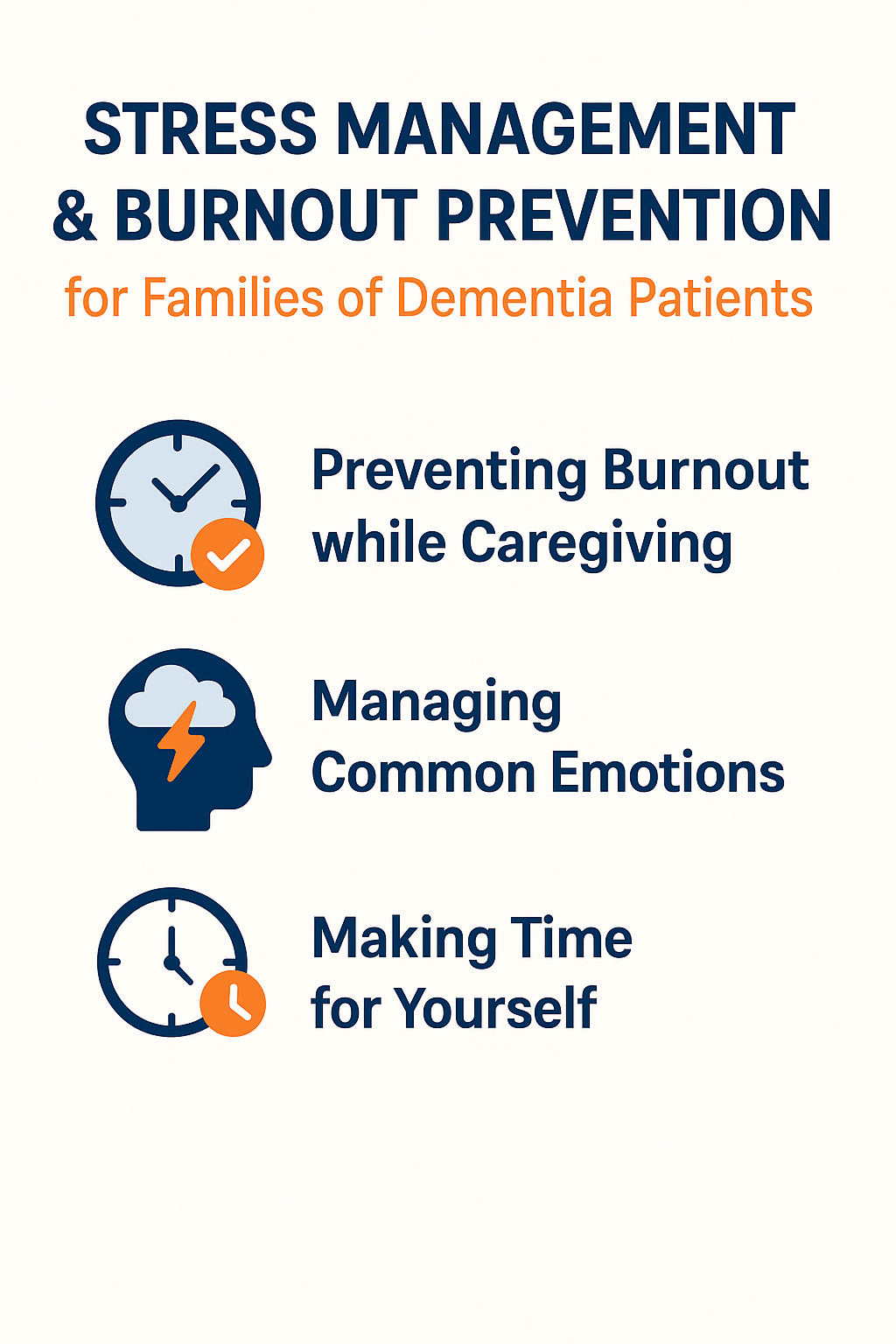
Caring for a loved one with dementia can be physically and emotionally demanding. Over time, this burden can lead to caregiver burnout. This educational material is designed to help caregivers reduce stress and maintain their own well-being while providing consistent, compassionate care.
1. Preventing Burnout During Caregiving
✔ Schedule Regular Breaks
- Plan 5–10 minute mini-breaks throughout the day.
- Secure at least a half-day break weekly whenever possible.
- Share responsibilities with family, friends, adult day care centers, or home health/respite services.
✔ Don’t Be Afraid to Ask for Help
- Handling everything alone leads to fast burnout.
- Reach out to relatives, community organizations, churches, support groups, or caregiving programs.
✔ Simplify Care Tasks
- Prioritize essential duties such as meals, medications, bathing, and mobility assistance.
- Use tools that reduce workload (pill organizers, reminders, mobility aids, safety devices).
✔ Build a Daily Routine
- A predictable schedule reduces stress for both caregiver and patient.
- Maintain consistent wake-up, meal, activity, and rest times.
2. Managing Common Emotions in Dementia Caregivers
✔ Guilt
- Thoughts like “I should have done better” are common.
- Remember: Perfect caregiving does not exist. Doing your best is enough.
✔ Frustration
- Repetitive questions, behavioral changes, and unpredictability create frustration.
- Step away briefly, breathe slowly, and use emotional regulation strategies.
- Recognizing these behaviors as part of dementia—not intentional—helps maintain calm.
✔ Sadness
- Changes in your loved one may create a sense of loss.
- Counseling, support groups, and faith-based support can provide comfort.
✔ Anger
- Overwhelm and exhaustion can lead to anger.
- Keep a “feeling journal,” attend therapy, or discuss stress during family meetings.
3. Creating ‘Me Time’ for Yourself
✔ Take 10–15 Minutes Daily for Yourself
- Drink a warm cup of tea
- Go for a short walk
- Listen to music
- Stretch or breathe deeply
✔ Schedule Regular Self-Care
- Plan monthly or biweekly personal time (massage, salon, café, hobbies).
- Remember: Taking care of yourself enables you to take better care of your loved one.
✔ Stay Socially Connected
- Keep in touch with friends and family.
- Send a short message if you don’t have time for a long conversation.
- Social isolation increases stress—stay connected.
✔ Use Professional and Community Resources
- Local dementia centers or caregiver education programs
- Home health and respite-care services
- Online caregiver communities and support groups
Final Message
Caring for someone with dementia is a journey you should not walk alone. Help becomes available when you ask for it, and protecting your own well-being ensures that your loved one remains safe and supported. Small moments of rest and self-care build the strength needed for quality caregiving.
If you’d like, I can also create a checklist version, a more visual layout, or a PDF formatted for printing or your website.
Ready to create a calmer plan at home?
Memorial & Greater Houston
📞713-932-0017
🏠Address: 9219 Katy Freeway, Suite 207, Houston, TX 77024
🌐Web: mpuhealthservices.com
© 2025 MedPro USA Health Services. All rights reserved.
#alzheimersupport #strokeawareness #memorycare #specializedcare#certifiedcare #professionalcare #expertcaregivers #medprousa #homehealthcare #trustedstaff #houstontx #personalizedcare #qualitycare #familysupport#dementiacare #familycaregivers #parkinsonsawareness #elderlysupport #specialcare #dementiaawareness #strokerecovery#dementiahomesafety; dementiaagitationprevention